
 Creating the deliciousness of this gluten free pasta dough reminded me of how, ten years ago when I first began my journey on the gluten free highway, I again and again longed for a morsel of the gluten rich recipes I was raised with. I’ve come a long way since then, re-learning my way in the kitchen and transforming those missed recipes into their tantalizing gluten free counterparts. I often refer to working on family recipes in my kitchen as “communing with my ancestors”. I chose to make this gluten free pasta for Sunday dinner and was tickled to recall making pasta with my grandmother, Yolanda Ruggiero, as a girl. We would first clean the house, followed by draping wax paper on all the dining room chairs as well as the dining room table. We would make pasta all day and hang it to dry atop all of that wax paper. She always insisted on waiting until the pasta was dry before preparing a meal with it. I remember thinking, in my little girl mind, that it would take F-O-R-E-V-A before we could eat it! I would eagerly wait for the next day, so we could cook the pasta and package the rest for future meals.
This gluten free pasta recipe is quite tasty. I have chosen to use some technologically updated equipment when preparing gluten free pasta. I use a food processor, but this recipe is excellent for hands in a well of flour. Additionally, the pasta dough can be rolled out by hand, however, this is quite laborious. I use a pasta machine and recommend running the dough through 5 or 6 times, gradually decreasing the thickness. I chose to make a thin spaghetti with this recipe and was unconcerned about perfecting rectangular pieces of thinned dough to then be cut into shape. This same recipe can be used for ravioli, in which case I recommend creating precise rectangular thinned dough, as it makes an eye appealing final square shape.
I recall how all of my elders who prepared homemade pasta would always state that one egg per cup of flour should be used followed by an additional egg “for the pot”. I have kept this standard in place. I use a combination of gluten free flours; sweet rice flour which is very soft without much grit is very important, potato starch and tapioca lend their binding abilities. I use a bit of potato flour to seal in moisture and some sorghum flour as it contributes a subtle wheat type flavor. To support pasta structure and growth during boiling, I add some guar gum. This pasta need only cook a few minutes until it is al dente (has “tooth”). Add salt to boiling water to prevent pasta from sticking to itself, salting pasta water sooner only creates rust pits in one’s cookware.
I create nests with the pasta and leave them to dry overnight on wax or parchment paper. When the pasta is brittle, wrap it in fresh wax or parchment paper and place in a bakery box or tin. The pasta stores well for a number of days.
Yields approximately one pound of pasta
3 whole Eggs
¾ cup gluten free Sweet Rice Flour
¼ cup + 1 tablespoon gluten free Tapioca Flour
¾ cup gluten free Potato Starch
1 tablespoon gluten free Potato Flour
2 tablespoon gluten free Sorghum Flour
1 ½ teaspoon gluten free Guar Gum
Pinch Salt
1 – 2 tablespoons Water
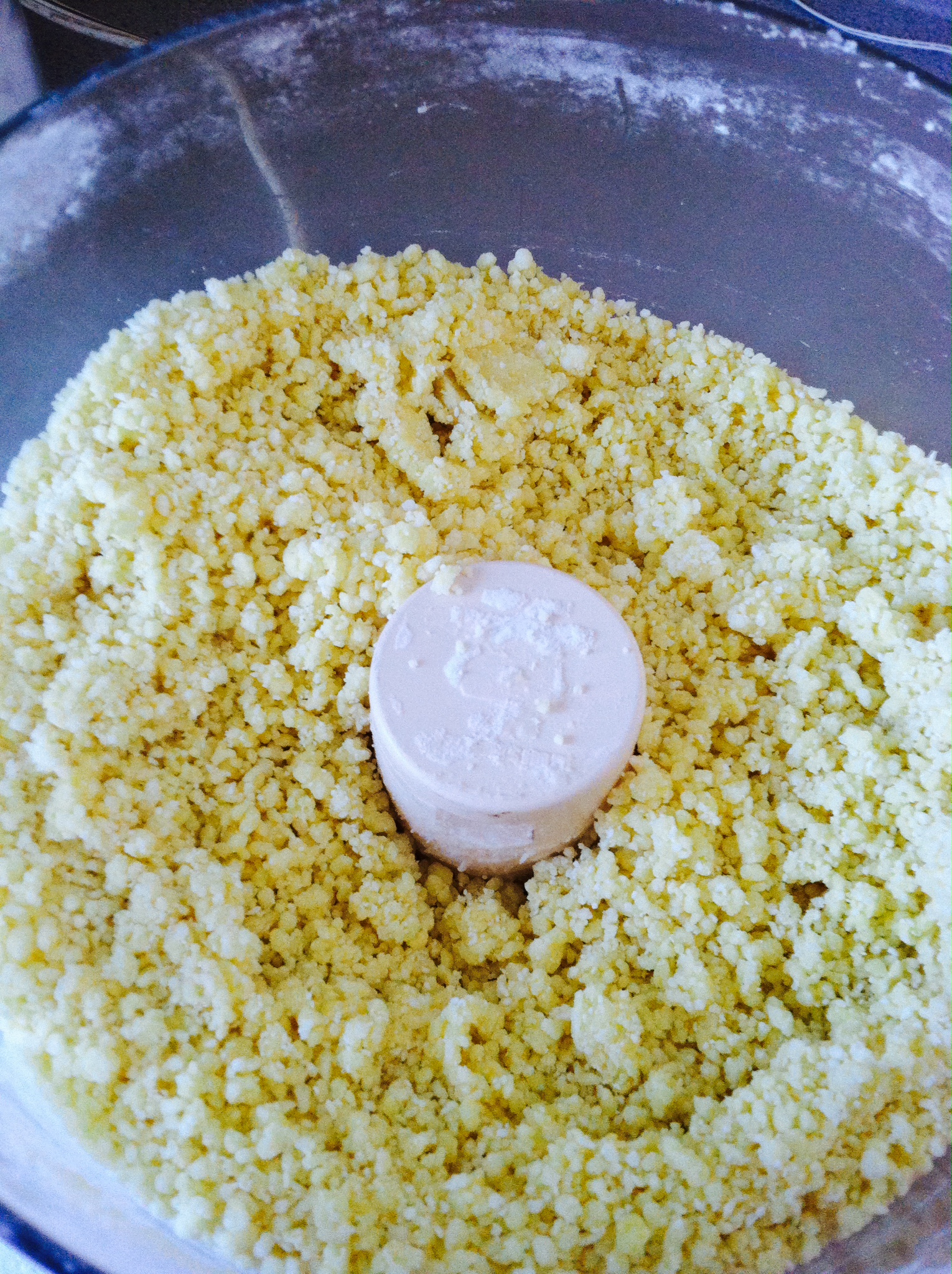
Place the sorghum, sweet rice flour, tapioca, potato starch, potato flour, guar gum and salt in a food processor bowl fitted with a dough blade. Pulse a few times to aerate and whisk the flours together.
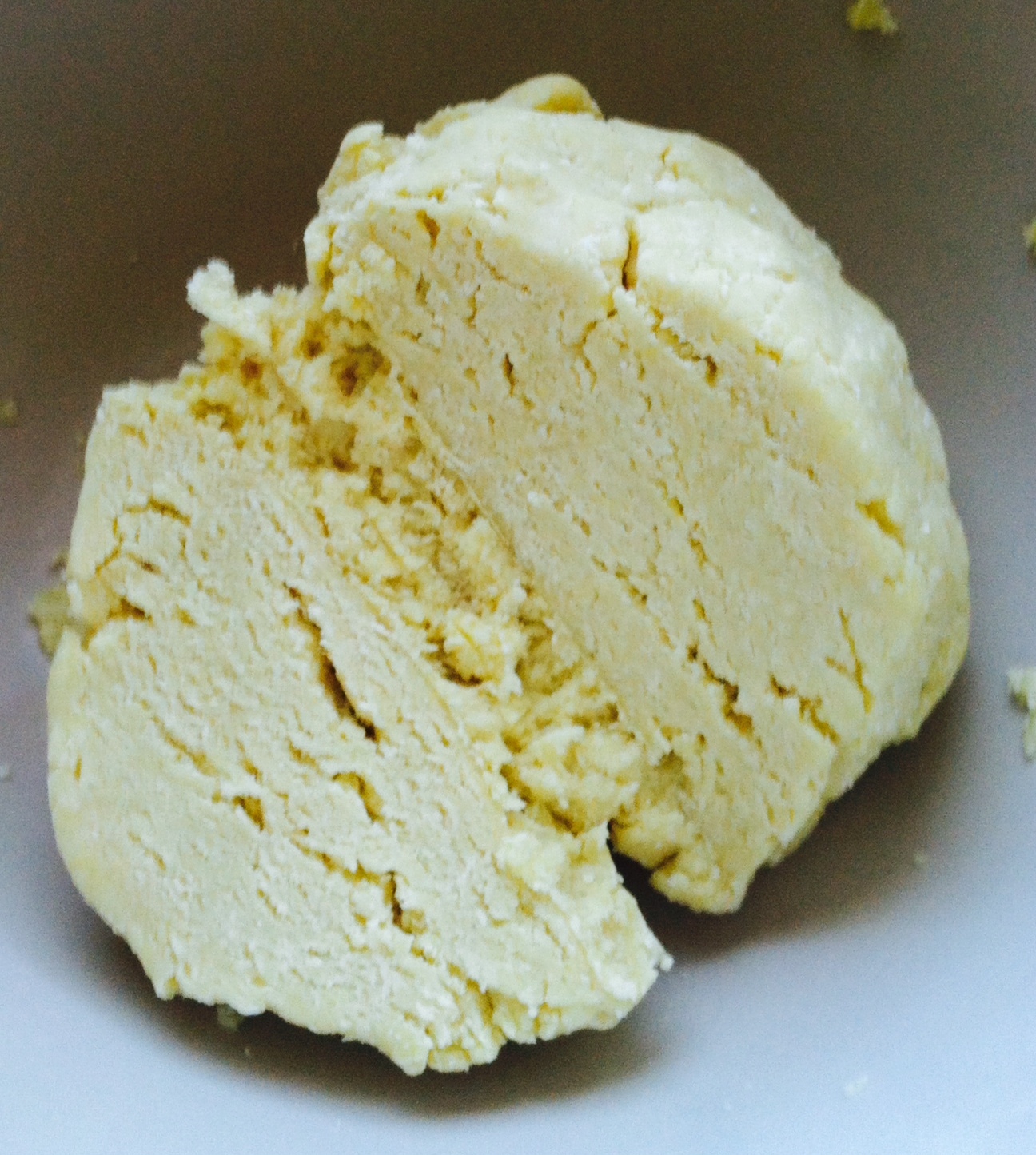
Add one egg at a time, pulsing between additions. The dough will be crumbly. Add 1-2 tablespoons of water, until dough is has tack but is not sticky.

Remove the dough from the bowl and knead for a few minutes. If the dough is sticky, add a teaspoon at a time of sweet rice flour. If the dough is too sticky, it will yield a damp product which is not easy to roll or dry.
Assemble the pasta machine, place rollers on lowest (widest) setting. Prepare parchment paper on a clean table or cookie sheets for later use. Also place parchment on the counter beneath both ends of the machine.
Pull off a three inch clump of dough. Place a paper towel dampened with water over the remaining dough. Use a rolling pin on a gluten free board or parchment paper, flatten the clump. Then roll the flattened piece through the rollers of the pasta machine (previously set to the lowest setting). I recommend rolling through the lowest setting twice and then decrease the rollers to smaller settings after each pass – a minimum of five passes, to about ¼ inch thickness.

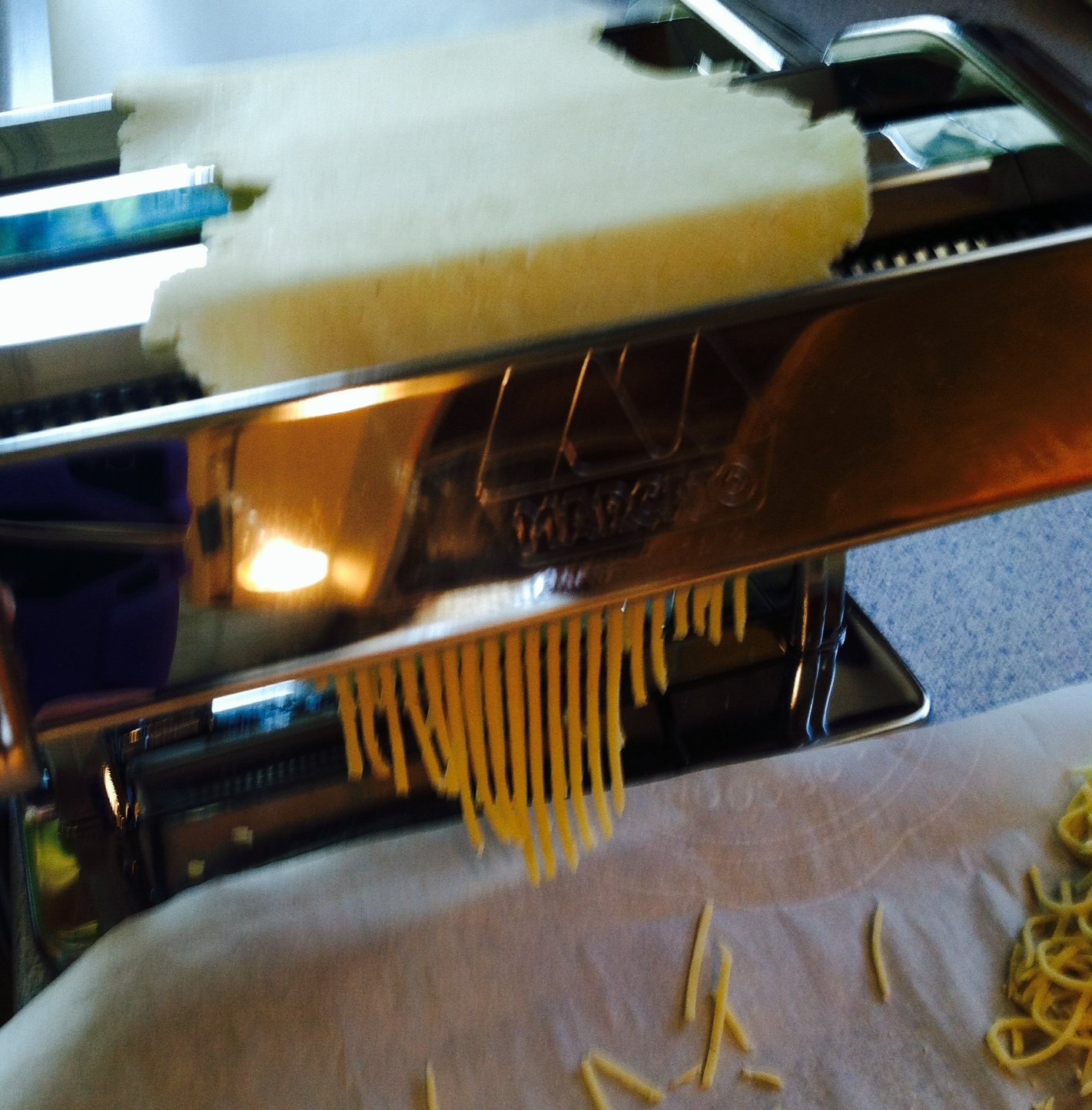
Pass the sufficiently flattened dough through the pasta shaping attachment of your choice. I used the thin spaghetti setting. Pass the dough through slowly, use one hand to gently catch the cut pasta. Place the pasta over four fingers and then gently swirl them into a nest shape over the parchment paper. Set the nests a few inches apart and allow them to dry overnight for 24 hours.

When the pasta is brittle it is dry. Cook in boiling salted water for 3-5 minutes, al dente to taste.
Store dried pasta nests on fresh parchment paper in a bakery box or tin.

“Homemade Gluten Free Pasta Dough” by Liz Conforti, Forget What You Know About Wheat(c) 2014
Serve with Kitchen Wisdom Gluten Free:


Visit Kitchen Wisdom Gluten Free:
Facebook Pinterest Twitter Google+ Instagram Tumblr
BUY Kitchen Wisdom Gluten Free
Kitchen Wisdom Gluten Free: Journey into a Culinary Cultural Evolution &
Learn How to Transform Southern Italian Recipes to Gluten Free
Kindle Paperback 

Kitchen Wisdom Gluten Free: Journey into a Culinary Cultural Evolution & Learn How to Transform Southern Italian Recipes to Gluten Free…Experience a Kitchen so Delicious, Those Who Can Eat Gluten Choose Not To! Available formats: eBook, & Paperback; On amazon.com, and at Select Vermont Retailers.
 Kitchen Wisdom Gluten Free